Navigation

Use The Labels To Navigate The Blog
Showing posts with label Aarons Favs. Show all posts

Thursday, 11 October 2012

Aarons Fav Cars - Mk 4 Golf GTI and R32 "VR6"

The Golf Mk4 was first introduced in August 1997, followed by a notchback version (VW Bora or, in North America, again VW Jetta) in August 1998 and a new Golf Variant (estate) in March 1999. There was no Mk4-derived Cabriolet, although the Mk3 Cabriolet received a facelift in late 1999 that comprised bumpers, grill and headlights similar to those of the Mark 4 models. New high-performance models included the 3.2 L VR6-engined four-wheel-drive Golf "R32" introduced in 2004, its predecessor the 2.8 L VR6-engined "Golf V6 4Motion" (succeeding the 2.9 L Mk3 "Golf VR6 Syncro"), as well as use of the famous 1.8T (turbo) 4-cylinder used in various Volkswagen Group models.

As of 2008, certain variants of the Golf/Bora Mk4 were still in production in Brazil, China, and Mexico. Revised versions of the Mk4 were sold in Canada marketed as the Golf City and Jetta City from 2007 to 2010. The two models were VW Canada's entry-level offerings. They received a significant freshening for the 2008 model year, including revised headlamps, taillamps, front and rear fascias, sound systems, and wheels. Both models were offered only with the 2.0 L, 8-valve SOHC four-cylinder gasoline engine, rated at 86 kW (115 bhp). They were the only entry-level offerings with an optional six-speed automatic. The production of Golf Mk4 for the U.S. market ended in 2006. But for the European markets, the production of the fourth generation ended in 2003.

When the Chinese market Bora received a July 2006 facelift, the Golf did too, becoming the "Bora HS" in the process. Because of the MK4's popularity and low cost, it is still in production in several countries, such as Brazil and Argentina, slightly facelifted.

Aarons Fav Cars - Ariel Atom 1996 - Ariel Atom 1.

The Ariel Atom is a high performance sports car made by the Ariel Motor Company based in Somerset, England and under licence in North America by TMI Autotech, Inc. at Virginia International Raceway in Alton, Virginia.

There have been four Ariel Atom incarnations to date: Ariel Atom, Ariel Atom 2, Ariel Atom 3 and Ariel Atom 500 V8. The current model is the Ariel Atom 3 which is the most powerful apart from the V8 model. The latter is a limited production model with a 500 bhp (373 kW; 507 PS) V8 engine made from two Suzuki Hayabusa engines.

The Ariel Atom is unusual in that it is exoskeletal — the chassis is prominently visible from the outside — and therefore lacks a roof, windows and other features normally found on road cars although a small windshield is available as an optional extra.

Specifications

0–60 mph (0–97 km/h): 2.8 seconds (manufacturer's claim)
Top speed: 155 mph, 250 km/h
Power: 245 bhp (183 kW; 248 PS) @ 8200 rpm (300 bhp supercharged)
Torque: 210 N·m (150 ft·lbf) @ 6100 rpm
Weight: 612 kg (1350 lb)
Transmission: Honda six-speed with reverse or General Motors six speed with reverse
Price: £30,000/£45,000 supercharged (cost in the US is $39,203.12 base price)
Engine: 2.0L Honda K20A1, 4 cylinder, i-VTEC or 2.0L supercharged, or General Motors 2.2L supercharged or 2.4L Ecotec 4 cylinder
Manufacturer: Ariel Motor Company Ltd
Length: 3,410 mm (134 in)
Width: 1,798 mm (70.8 in) / 1,828 mm (72.0 in) with 225 Tyres
Height: 1,195 mm (47.0 in)
Track: 1,600 mm (63 in) front and rear
Wheelbase: 2,345 mm (92.3 in)
Designer: Nik Smart


In 2005 Track and Race Car magazine published the results of a comprehensive test of a range of cars, from the Porsche 911 Carrera S, Ford GT, BMW M5 to the Caterham CSR 260. The Supercharged Ariel Atom 1 won the 0–100–0 mph (0–161–0 km/h) test by a clear margin at 10.88 seconds, ahead of the Caterham CSR 260 (11.41) and the Ford GT in 4th (13.17).

The following year, the Atom won Autocar's 0–100 mph challenge as the new Ariel Atom 2 300 bhp supercharged edition achieved a time of 6.86 seconds, and then stopped from 100 in 3.8 seconds. At the National Exhibition Centre in Birmingham, the Atom broke the indoor speed record. The high gloss floor that the cars ran on was only 220 m (720 ft) long, with an open door at the end of the hall. The driver of the Atom launched in fourth gear and still had wheelspin until the car reached 70 mph (110 km/h) and started to get traction. The Atom was beaten only by a Class 9 Autograss car powered by a 2.0l Lexus/Toyota touring car engine which set the official indoor speed record, beating the previous record held by a Toyota F1 car driven by Top Gear's driver The Stig.

The Sunday Times measured the time taken for the Atom to accelerate from 0 to 60 mph (97 km/h) at 2.89 seconds, making it the world's third fastest accelerating production car then available after the $1.3 million, 1,001 PS (987 bhp) Bugatti Veyron at 2.46 seconds, and the Ultima GTR at 2.6 seconds; the review was in 2005.

Tuesday, 9 October 2012

Aarons Fav Singers - Rob Zombie

Rob Zombie born Robert Bartleh Cummings
 January 12, 1965


is an American musician, film director, screenwriter and film producer. He legally changed his name to Rob Zombie in 1996. He rose to prominence as a founding member of the band White Zombie which formed in the mid-1980s, and rose to fame in the early 1990s. As a solo artist, he has released four studio albums, five compilation albums, and a live album. He has expanded his career and become a director, and has directed a total of six films, the majority of which he also wrote or co-wrote. He has also released numerous brands of comic books, and appeared as an actor on numerous occasions.

Their debut album, Soul-Crusher, was released in 1987 and was followed by their second album Make Them Die Slowly in 1989. They rose to prominence after the success of their third album, La Sexorcisto: Devil Music, Vol. 1, and its lead single "Thunder Kiss '65" in 1993. The album went on to be certified multi-platinum by the RIAA, for sales exceeding two million copies in the US. Their fourth and final studio album, Astro Creep: 2000, became their first top-10 entry on the Billboard 200, and their second album to reach multi-platinum status. Zombie began his solo career with the release of his 1998 debut album Hellbilly Deluxe. The album was both a critical and commercial success, spawning three hit singles, reaching the Top 5 of the Billboard 200, and selling over three million copies worldwide. Hellbilly is Zombie's highest selling album to date. He followed the success of the album with The Sinister Urge in 2001, which had similar success to that of its predecessor. Zombie's first greatest hits album, Past, Present & Future, was released in 2003, and reached Platinum status by the RIAA. His third studio album, Educated Horses, was released in 2006, and was his third Top 10 entry on the Billboard 200. In 2010, he released Hellbilly Deluxe 2, calling it a companion to his debut album. His fifth album is currently in production, and is slated for a 2013 release date.

Following his success as a musician, Zombie began directing, writing and producing films. His first film, House of 1000 Corpses, was completed in 2000, but numerous struggles with the distributor over the film's violence and gore ultimately led to the film not being released until 2003. Its sequel, The Devil's Rejects, was released in 2005. The two films have gained a cult following since their release, and helped boost Zombie's career. In 2007, he released his third film, a remake of the 1978 classic film Halloween. The film went on to gross over $80 million, the highest grossing film in the Halloween franchise. In 2009, Zombie released a sequel for the film, titled Halloween II. In 2009, Zombie released his first animated film, The Haunted World of El Superbeasto, based on his comic book series of the same name. His film The Lords of Salem is slated for a 2012 release date, while another film, Tyrannosaurus Rex, is set to be released sometime after Lords. Zombie has also bought the rights to a film about the Philadelphia Flyers, titled The Broad Street Bullies, though no release date for the film has been announced yet. Zombie directed the majority of his band White Zombie's music videos, as well as numerous videos of his own. Zombie's lyrics are noted for their horror and sci-fi themes, and his live shows for their elaborate shock rock theatricality. He has sold over 15 million albums worldwide, and had six Top 20 hits on the Billboard Hot Mainstream Rock Tracks chart in the United States.

Monday, 8 October 2012

Stonehenge

Stonehenge is a prehistoric monument located in the English county of Wiltshire, about 2.0 miles (3.2 km) west of Amesbury and 8 miles (13 km) north of Salisbury. One of the most famous sites in the world, Stonehenge is composed of a circular setting of large standing stones set within earthworks. It is at the centre of the most dense complex of Neolithic and Bronze Age monuments in England, including several hundred burial mounds.

Archaeologists believe the stone monument was constructed anywhere from 3000 BC to 2000 BC, as described in the chronology below. Radiocarbon dating in 2008 suggested that the first stones were erected in 2400–2200 BC, whilst another theory suggests that bluestones may have been erected at the site as early as 3000 BC (see phase 1 below).

The surrounding circular earth bank and ditch, which constitute the earliest phase of the monument, have been dated to about 3100 BC. The site and its surroundings were added to the UNESCO's list of World Heritage Sites in 1986 in a co-listing with Avebury Henge monument. It is a national legally protected Scheduled Ancient Monument. Stonehenge is owned by the Crown and managed by English Heritage, while the surrounding land is owned by the National Trust.

Archaeological evidence found by the Stonehenge Riverside Project in 2008 indicates that Stonehenge could possibly have served as a burial ground from its earliest beginnings. The dating of cremated remains found on the site indicate that deposits contain human bone material from as early as 3000 BC, when the initial ditch and bank were first dug. Such deposits continued at Stonehenge for at least another 500 years. The site is a place of religious significance and pilgrimage in Neo-Druidism.

 The Oxford English Dictionary cites Ælfric's 10th-century glossary, in which henge-cliff is given the meaning "precipice", or stone, thus the stanenges or Stanheng "not far from Salisbury" recorded by 11th-century writers are "supported stones". William Stukeley in 1740 notes, "Pendulous rocks are now called henges in Yorkshire...I doubt not, Stonehenge in Saxon signifies the hanging stones." Christopher Chippindale's Stonehenge Complete gives the derivation of the name Stonehenge as coming from the Old English words stān meaning "stone", and either hencg meaning "hinge" (because the stone lintels hinge on the upright stones) or hen(c)en meaning "hang" or "gallows" or "instrument of torture". Like Stonehenge's trilithons, medieval gallows consisted of two uprights with a lintel joining them, rather than the inverted L-shape more familiar today. The "henge" portion has given its name to a class of monuments known as henges. Archaeologists define henges as earthworks consisting of a circular banked enclosure with an internal ditch. As often happens in archaeological terminology, this is a holdover from antiquarian usage, and Stonehenge is not truly a henge site as its bank is inside its ditch. Despite being contemporary with true Neolithic henges and stone circles, Stonehenge is in many ways atypical – for example, at over 7.3 metres (24 ft) tall, its extant trilithons supporting lintels held in place with mortise and tenon joints, make it unique.

Mike Parker Pearson, leader of the Stonehenge Riverside Project based at Durrington Walls, noted that Stonehenge appears to have been associated with burial from the earliest period of its existence:

Stonehenge was a place of burial from its beginning to its zenith in the mid third millennium B.C. The cremation burial dating to Stonehenge's sarsen stones phase is likely just one of many from this later period of the monument's use and demonstrates that it was still very much a domain of the dead.
— Mike Parker Pearson

Stonehenge evolved in several construction phases spanning at least 1,500 years. There is evidence of large-scale construction on and around the monument that perhaps extends the landscape's time frame to 6,500 years. Dating and understanding the various phases of activity is complicated by disturbance of the natural chalk by periglacial effects and animal burrowing, poor quality early excavation records, and a lack of accurate, scientifically verified dates. The modern phasing most generally agreed to by archaeologists is detailed below. Features mentioned in the text are numbered and shown on the plan, right.
Before the monument (8000 BC forward)

Archaeologists have found four, or possibly five, large Mesolithic postholes (one may have been a natural tree throw), which date to around 8000 BC, beneath the nearby modern tourist car-park. These held pine posts around 0.75 metres (2 ft 6 in) in diameter which were erected and eventually rotted in situ. Three of the posts (and possibly four) were in an east-west alignment which may have had ritual significance; no parallels are known from Britain at the time but similar sites have been found in Scandinavia. Salisbury Plain was then still wooded but 4,000 years later, during the earlier Neolithic, people built a causewayed enclosure at Robin Hood's Ball and long barrow tombs in the surrounding landscape. In approximately 3500 BC, a Stonehenge Cursus was built 700 metres (2,300 ft) north of the site as the first farmers began to clear the trees and develop the area.

The first monument consisted of a circular bank and ditch enclosure made of Late Cretaceous (Santonian Age) Seaford Chalk, (7 and 8), measuring about 110 metres (360 ft) in diameter, with a large entrance to the north east and a smaller one to the south (14). It stood in open grassland on a slightly sloping spot. The builders placed the bones of deer and oxen in the bottom of the ditch, as well as some worked flint tools. The bones were considerably older than the antler picks used to dig the ditch, and the people who buried them had looked after them for some time prior to burial. The ditch was continuous but had been dug in sections, like the ditches of the earlier causewayed enclosures in the area. The chalk dug from the ditch was piled up to form the bank. This first stage is dated to around 3100 BC, after which the ditch began to silt up naturally. Within the outer edge of the enclosed area is a circle of 56 pits (13), each about a metre (3'3") in diameter, known as the Aubrey holes after John Aubrey, the 17th-century antiquarian who was thought to have first identified them. The pits may have contained standing timbers creating a timber circle, although there is no excavated evidence of them. A recent excavation has suggested that the Aubrey Holes may have originally been used to erect a bluestone circle. If this were the case, it would advance the earliest known stone structure at the monument by some 500 years. A small outer bank beyond the ditch could also date to this period.

Evidence of the second phase is no longer visible. The number of postholes dating to the early 3rd millennium BC suggest that some form of timber structure was built within the enclosure during this period. Further standing timbers were placed at the northeast entrance, and a parallel alignment of posts ran inwards from the southern entrance. The postholes are smaller than the Aubrey Holes, being only around 0.4 metres (16 in) in diameter, and are much less regularly spaced. The bank was purposely reduced in height and the ditch continued to silt up. At least twenty-five of the Aubrey Holes are known to have contained later, intrusive, cremation burials dating to the two centuries after the monument's inception. It seems that whatever the holes' initial function, it changed to become a funerary one during Phase 2. Thirty further cremations were placed in the enclosure's ditch and at other points within the monument, mostly in the eastern half. Stonehenge is therefore interpreted as functioning as an enclosed cremation cemetery at this time, the earliest known cremation cemetery in the British Isles. Fragments of unburnt human bone have also been found in the ditch-fill. Dating evidence is provided by the late Neolithic grooved ware pottery that has been found in connection with the features from this phase.

Archaeological excavation has indicated that around 2600 BC, the builders abandoned timber in favour of stone and dug two concentric arrays of holes (the Q and R Holes) in the centre of the site. These stone sockets are only partly known (hence on present evidence are sometimes described as forming ‘crescents’); however, they could be the remains of a double ring. Again, there is little firm dating evidence for this phase. The holes held up to 80 standing stones (shown blue on the plan), only 43 of which can be traced today. The bluestones (some of which are made of dolerite, an igneous rock), were thought for much of the 20th century to have been transported by humans from the Preseli Hills, 150 miles (240 km) away in modern-day Pembrokeshire in Wales. Another theory that has recently gained support is that they were brought much nearer to the site as glacial erratics by the Irish Sea Glacier. Other standing stones may well have been small sarsens, used later as lintels. The stones, which weighed about four tons, consisted mostly of spotted Ordovician dolerite but included examples of rhyolite, tuff and volcanic and calcareous ash; in total around 20 different rock types are represented. Each monolith measures around 2 metres (6.6 ft) in height, between 1 m and 1.5 m (3.3–4.9 ft) wide and around 0.8 metres (2.6 ft) thick. What was to become known as the Altar Stone (1), is almost certainly derived from either Carmarthenshire or the Brecon Beacons and may have stood as a single large monolith.

The north-eastern entrance was widened at this time, with the result that it precisely matched the direction of the midsummer sunrise and midwinter sunset of the period. This phase of the monument was abandoned unfinished, however; the small standing stones were apparently removed and the Q and R holes purposefully backfilled. Even so, the monument appears to have eclipsed the site at Avebury in importance towards the end of this phase.

The Heelstone (5), a Tertiary sandstone, may also have been erected outside the north-eastern entrance during this period. It cannot be accurately dated and may have been installed at any time during phase 3. At first it was accompanied by a second stone, which is no longer visible. Two, or possibly three, large portal stones were set up just inside the north-eastern entrance, of which only one, the fallen Slaughter Stone (4), 4.9 metres (16 ft) long, now remains. Other features, loosely dated to phase 3, include the four Station Stones (6), two of which stood atop mounds (2 and 3). The mounds are known as "barrows" although they do not contain burials. Stonehenge Avenue, (10), a parallel pair of ditches and banks leading 2 miles (3.2 km) to the River Avon, was also added. Two ditches similar to Heelstone Ditch circling the Heelstone (which was by then reduced to a single monolith) were later dug around the Station Stones.
Stonehenge 3 II (2600 BC to 2400 BC)

During the next major phase of activity, 30 enormous Oligocene-Miocene sarsen stones (shown grey on the plan) were brought to the site. They may have come from a quarry, around 25 miles (40 km) north of Stonehenge on the Marlborough Downs, or they may have been collected from a "litter" of sarsens on the chalk downs, closer to hand. The stones were dressed and fashioned with mortise and tenon joints before 30 were erected as a 33 metres (108 ft) diameter circle of standing stones, with a ring of 30 lintel stones resting on top. The lintels were fitted to one another using another woodworking method, the tongue and groove joint. Each standing stone was around 4.1 metres (13 ft) high, 2.1 metres (6 ft 11 in) wide and weighed around 25 tons. Each had clearly been worked with the final visual effect in mind; the orthostats widen slightly towards the top in order that their perspective remains constant when viewed from the ground, while the lintel stones curve slightly to continue the circular appearance of the earlier monument. The inward-facing surfaces of the stones are smoother and more finely worked than the outer surfaces. The average thickness of the stones is 1.1 metres (3 ft 7 in) and the average distance between them is 1 metre (3 ft 3 in). A total of 75 stones would have been needed to complete the circle (60 stones) and the trilithon horseshoe (15 stones). Unless some of the sarsens have since been removed from the site, the ring appears to have been left incomplete. The lintel stones are each around 3.2 metres (10 ft), 1 metre (3 ft 3 in) wide and 0.8 metres (2 ft 7 in) thick. The tops of the lintels are 4.9 metres (16 ft) above the ground.

Within this circle stood five trilithons of dressed sarsen stone arranged in a horseshoe shape 13.7 metres (45 ft) across with its open end facing north east. These huge stones, ten uprights and five lintels, weigh up to 50 tons each. They were linked using complex jointing. They are arranged symmetrically. The smallest pair of trilithons were around 6 metres (20 ft) tall, the next pair a little higher and the largest, single trilithon in the south west corner would have been 7.3 metres (24 ft) tall. Only one upright from the Great Trilithon still stands, of which 6.7 metres (22 ft) is visible and a further 2.4 metres (7 ft 10 in) is below ground.

The images of a 'dagger' and 14 'axeheads' have been carved on one of the sarsens, known as stone 53; further carvings of axeheads have been seen on the outer faces of stones 3, 4, and 5. The carvings are difficult to date, but are morphologically similar to late Bronze Age weapons; recent laser scanning work on the carvings supports this interpretation. The pair of trilithons in the north east are smallest, measuring around 6 metres (20 ft) in height; the largest, which is in the south west of the horseshoe, is almost 7.5 metres (25 ft) tall.

This ambitious phase has been radiocarbon dated to between 2600 and 2400 BC, slightly earlier than the Stonehenge Archer, discovered in the outer ditch of the monument in 1978, and the two sets of burials, known as the Amesbury Archer and the Boscombe Bowmen, discovered 3 miles (4.8 km) to the west. At about the same time, a large timber circle and a second avenue were constructed 2 miles (3.2 km) away at Durrington Walls overlooking the River Avon. The timber circle was orientated towards the rising sun on the midwinter solstice, opposing the solar alignments at Stonehenge, whilst the avenue was aligned with the setting sun on the summer solstice and led from the river to the timber circle. Evidence of huge fires on the banks of the Avon between the two avenues also suggests that both circles were linked, and they were perhaps used as a procession route on the longest and shortest days of the year. Parker Pearson speculates that the wooden circle at Durrington Walls was the centre of a 'land of the living', whilst the stone circle represented a 'land of the dead', with the Avon serving as a journey between the two.

Stonehenge 3 IV (2280 BC to 1930 BC)

This phase saw further rearrangement of the bluestones. They were arranged in a circle between the two rings of sarsens and in an oval at the centre of the inner ring. Some archaeologists argue that some of these bluestones were from a second group brought from Wales. All the stones formed well-spaced uprights without any of the linking lintels inferred in Stonehenge 3 III. The Altar Stone may have been moved within the oval at this time and re-erected vertically. Although this would seem the most impressive phase of work, Stonehenge 3 IV was rather shabbily built compared to its immediate predecessors, as the newly re-installed bluestones were not well-founded and began to fall over. However, only minor changes were made after this phase.

Soon afterwards, the north eastern section of the Phase 3 IV bluestone circle was removed, creating a horseshoe-shaped setting (the Bluestone Horseshoe) which mirrored the shape of the central sarsen Trilithons. This phase is contemporary with the Seahenge site in Norfolk.
After the monument (1600 BC on)

The last known construction at Stonehenge was about 1600 BC (see 'Y and Z Holes'), and the last usage of it was probably during the Iron Age. Roman coins and medieval artefacts have all been found in or around the monument but it is unknown if the monument was in continuous use throughout British prehistory and beyond, or exactly how it would have been used. Notable is the massive Iron Age hillfort Vespasian's Camp built alongside the Avenue near the Avon. A decapitated 7th century Saxon man was excavated from Stonehenge in 1923. The site was known to scholars during the Middle Ages and since then it has been studied and adopted by numerous groups.


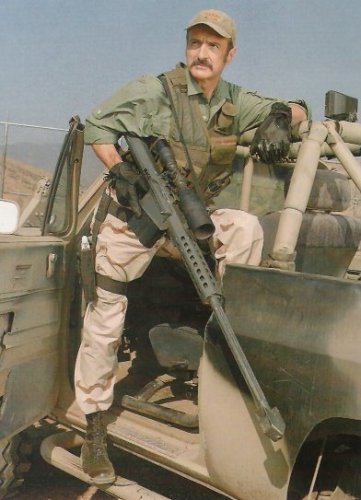
Aaron Fav Fictional Characters - Burt Gummer

Burt Gummer is a fictional character, played by actor Michael Gross, from the Tremors film series and the short lived SciFi Channel TV program of the same name. Appearing in Tremors, Tremors 2: Aftershocks, Tremors 3: Back to Perfection, and most episodes of the TV series, Burt Gummer is a firearms enthusiast and a paranoid, survivalist, right-wing, anti-government, gun nut. He and his former wife, Heather Gummer (played by Reba McEntire), were the first persons in the film series to directly kill a Graboid. He has an "overkill" approach to trouble and takes himself deadly seriously. Although he is only the central character in Tremors 3 and the TV series, his eccentric personality has made him a favorite among Tremors fans and the de facto star of the franchise, along with the vicious Graboids who oppose him. His ancestor, Hiram Gummer (also played by Gross), appears in Tremors 4: The Legend Begins.

In an interview, when asked, "Did you ever think that Burt would become part of a franchise?" Gross replied, "I knew it was an intriguing character." The actor goes on to assert, "Well, I love Burt. You know, there's a little scene in the third movie that is quintessential Burt. Burt is so fear-driven that he's a paranoid, ultimately, but a comic paranoid. And there's a scene in which he goes up to his house to punch in his keycode on his pad. But before he does, he takes a good look around and stands in front of the pad - there's nobody there for miles! - but he blocks the keypad with his body. Because Burt would rightly assume that there's somebody in the hills with a high-powered telescope who wants his keypad information, wants the code. Now that's the level of paranoia. Does it get funny? Yeah, because it's just so over the top. I love that. I love that about him. It's inherent in the fact that he has no sense of humor. It's because he doesn't consider life funny that we find him funny and his extremes which are so marvelous in human behavior....And one of the great things I love about Burt and what the writers do with him is he will prepare himself in certain ways and then we find out that, once again, he's not prepared because the animals have mutated in such a way that they've found a way to get around his best defenses. He couldn't possibly plan for every contingency and he thinks he has."
 
Although very little is known about Burt's past, it has been hinted that he might've been involved in the military, and at the very least possesses extensive knowledge of military history, tactics, and protocol. Burt has also had an affection for guns since middle-school, evidenced by his telling Desert Jack that he "converted [his] BB gun to automatic by the eighth-grade." While he is very fond of his firearms, he is also strict about personal safety and care in the handling of firearms.

Burt settled in the town of Perfection with his wife, Heather (Reba McEntire), sometime before Tremors 1, a site they chose tactically due to its geographic isolation. It was later revealed in Tremors 4, however, that his ancestor Hiram Gummer (again played by Gross) inherited a silver mine in the town (which was named "Rejection" at the time), and went on to marry the local town-mistress. Stampede Entertainment's official website states that Hiram and his wife left in 1902 for San Francisco after a disagreement with Nevada bureaucrats over the date of the town's founding, and never returned (which may hint at the origins of Burt's anti-government sentiments). It may also simply be that Burt inherited the land, and given the choice, Burt & Heather located themselves in Perfection for the "geographic isolation".

Whether there is any direct connection between these events and Burt's choice to move to Perfection is unknown, but prior to the events of Tremors 3, Burt did possess an inheritance of silver bars from Hiram's ownership of the mine (as referenced in Tremors the Series). This massive inheritance also explains Burt's extensive weaponry and supplies, though some of the weapons may have been inherited as well, as Hiram developed a fondness for firearms over the course of Tremors 4.

In the first film, Burt was shown to be paranoid about surviving "World-War III", and his main cause as a survivalist. He had spent all of his years preparing for the possibility, building a stock of several years' worth of food and provisions in his home's underground bomb shelter. After the Graboid attacks of Tremors 1, Burt instead begins to worry less about World War III (possibly owing to the collapse of Soviet Russia, after which he sank into a deep depression as seen in Tremors 2), and becomes obsessed instead with Graboids, growing more obsessed with each new installment of the series, even having a massive underground concrete wall built to protect his compound. These obsessions and possibly the fear of the Graboids eventually cause his wife to divorce him sometime shortly before Tremors 2.

His regard to the final surviving albino Graboid from the end of Tremors 3 and the subsequent TV series, El Blanco, who is protected by his endangered species status (and inability to spawn the far more dangerous Shriekers, making him the only stable Graboid specimen ever found), is as something of a nemesis (their relationship was once compared to be somewhat like Captain Ahab & Moby-Dick), as Burt must balance his survival tactics with efforts to intentionally avoid harming the Graboid. Despite his animosity towards El Blanco, Burt has saved the Graboid's life on a few occasions, in the series premiere even begging the driven insane Graboid not to make him kill it, before destroying the machine driving it nuts. El Blanco also, if inadvertently, saved his life from an Ass Blaster when Desert Jack tricked it into eating the creature as it was about to kill Burt.

One controversy is how he gets his weapons and ammo, despite all of his guns being legal (except an SMG he is seen to own, though it may be a National Firearms Act registered weapon, and therefore lawful), the bullets for the Grizzly Big Boar and Barrett M82 .50 caliber BMG sniper rifle he wields are a topic that could be debated. How he obtained a minigun legally is also questionable. While it is possible he obtained them illegally, his repeated interactions with Department of the Interior official W.D. Twitchell in Tremors the Series made implications that Twitchell kept a close eye on all activity in Perfection valley, making it less likely that Burt accomplished illegal imports unnoticed. It is also possible that he undertook a special NFA process to purchase completely legal transferable title II weapons, which would include any of an array of sub-machine guns or even his minigun.

Burt has had many firsts and unique experiences with Graboids, having been the first to directly kill one via weaponry (the first was killed when it accidentally collided with a concrete wall at high speed), as well as being the only person to ever survive being eaten by a Graboid, having been eaten while inside a barrel; the Graboid was subsequently killed and cut open, allowing Burt to escape and survive. Burt has also probably killed more Graboids and their offspring than any other person, having taken out one in the first film, many of them with explosives in Tremors 2, having defeated an entire group of shriekers by himself during Tremors 2, another group of Shriekers at the start of Tremors 3, a number of the ass-blasters in Tremors 3, and a number of Shriekers in Tremors the Series. Recognized for his skill and expertise in the matter, W.D. Twitchell of the Department of the Interior often enlists Burt to deal with Graboid hatchlings in various populated areas of the United States when they occur.


Tremors (1990) 

[Burt Gummer, with his wife Heather at his side, berates the dead monster fought off with their "family arsinal"]
Burt Gummer: Broke into the wrong God damn rec room, didn't ya you bastard!

[Burt Gummer looks at his bomb shelter for perhaps the last time]
Burt Gummer: Food for five years, a thousand gallons of gas, air filtration, water filtration, Geiger counter. Bomb shelter! Underground... God damn monsters.

Burt Gummer: No tracks, no sign, no spoor... you'd think after eating all those sheep they'd have to take a dump *some*place

Valentine McKee: Come on you two, let's go, we're headed for the mountains!
Burt Gummer: [Hefts bag of weapons] If that's how we're doin it, we're going prepared!

Valentine McKee: We can't hold still long! These things are damn smart! They're getting smarter by the minute!
Burt Gummer: That's fine!
[Holds up a stick of dynamite]
Burt Gummer: We got some new things to teach 'em!

[Burt cuts off a piece of fuse for a bomb for Earl]
Earl Bassett: What kind of fuse is that?
Burt Gummer: Cannon fuse
Earl Bassett: What the hell do you use it for?
Burt Gummer: My cannon!

Valentine McKee: What the hell's in those things, Burt?
Burt Gummer: A few household chemicals in the proper proportions.

Burt Gummer: [handing out weapons and refusing to give Melvin one] I wouldn't give you a gun if it were World War 3.

Valentine McKee: [speaking to Burt over a radio and is trying to tell him about the monsters] Burt, it's under the ground! It's an underground monster!
Burt Gummer: [over the radio, as a monster comes through his rec room wall] Jesus Chri...!
[transmission turns to static]


Tremors II: Aftershocks (1996)

Grady: [it's night, Grady and Earl are waiting on top of their stranded truck for Pedro to arrive, an explosion sounds in the distance]
[referring to Burt]
Grady: Jesus! He got another one.
Earl Bassett: That man never sleeps.
[two more explosions sound in the distance]
Burt Gummer: [over radio] Guys, Burt here. Doing a little night fishing. Got three of 'em on a cluster chare. I'd say we're about even now. Over.
Earl Bassett: Come on, Burt. This isn't a competition.
Burt Gummer: [over radio] Well, who's competing? I'm just saying the score is tied, that's all. Over.
Grady: Well, 'son', no it isn't, cuz we just caught a live one. How 'bout that.
Burt Gummer: [over radio] A live one? How in the hell...
Grady: Well, that's our little secret. Happy hunting, Burt.
[turns radio off]
Earl Bassett: [laughing] I'll bet that burned his skinny ass!

Burt Gummer: I am COMPLETELY out of ammo. That's never happened to me before.

[Burt has just blown up a Graboid]
Burt: Memo: 4 pounds of C-4 may be a bit -
[pebbles rain down onto his helmet]
Burt: excessive.

Burt Gummer: I feel I was denied critical need-to-know information.

[Upon being introduced to Burt's anti-tank rifle]
Earl Bassett: Man Burt, you put a whole new shine on the word 'overkill'.
Burt Gummer: When you need it, and don't have it... you sing a different tune.

Burt Gummer: I didn't know... how could I have known? I wanted maximum penetration!
Earl Bassett: [Looks at destroyed engine] Well, you got it.

Burt: It's gonna be big!
Grady: But is it gonna be today!

[hiding from the Shriekers, Earl, Grady, and Kate are on top of some containers, Burt is inside the scoop of a bulldozer]
Grady: Burt are you *sure* you don't have any more bullets? Did you check *all* your pockets?
Burt Gummer: You know, as I lie here, I can't help but notice... the reason I am out of nine millimeter rounds is that I was not properly briefed. And the reason for that is that this mission was not properly researched. If certain people had bothered to gather intelligence on the creatures before bumbling into the situation...
Earl Bassett: Burt, knock it off!
Burt Gummer: ...We wouldn't be down here with single-shot big bores when we should be packing full auto, preferably belt-fed!
[a Shrieker near Burt grunts loudly]
Burt Gummer: [to the Shrieker] Shut up!

Earl Bassett: Jesus, Burt! You smoked his ass!
Burt: Just doing what I can with what I got.

Burt Gummer: [Earl has set a bomb to blow up a garage containing the Shriekers] Earl! Earl, the bomb, how long did you set it for?
Earl Bassett: Oh, I... I don't know, I just punched in some numbers and threw it in the back of your truck!
Burt Gummer: [horrified] You WHAT? That's 2,5 tons of high explosives, Earl!
Earl Bassett: You mean that's not enough?
[panicking]
Earl Bassett: Oh Burt, don't tell me it's not enough!
Burt Gummer: Not enou... Never mind, just run! Run!

Burt Gummer: I feel I was denied critical NEED TO KNOW information.

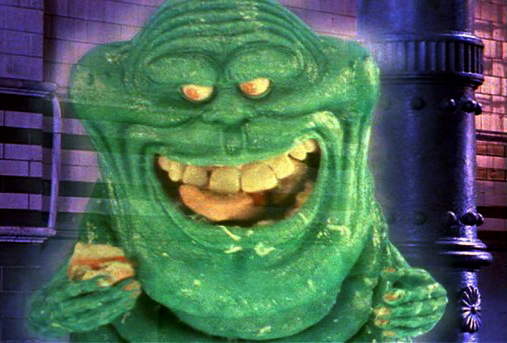
Aarons Fav Fictional Characters - Slimer

Slimer, also known as "the spud," was a ghost made up of pure ectoplasm and the first ghost successfully captured by the Ghostbusters. Slimer is well known for his gigantic appetite and the slime he leaves behind when he passes through solid objects.

Throughout the first film he appears to lack intelligence and was all about getting a good snack. It was a normally shy ghost but is not afraid to slime when cornered. In the second movie, it appears that Slimer got smarter and could drive a bus. So far, in the video game and cartoon he has gotten smarter and seems to understand basic human concepts.

Slimer was a legendary ghost to all on the original staff of the Sedgewick Hotel. His usual territory was the twelfth floor, but his outings were usually non-violent and simply involved eating food. As a result, the hotel was able to keep a lid on the supernatural problems (for a while). For some reason, Gozer's approaching time of arrival provoked Slimer (and many other ghosts) into being much more active than usual. Eventually the staff couldn't keep the ghost a secret anymore and called the Ghostbusters. However, the Ghostbusters had not yet fully tested their equipment and weren't completely prepared for a full capture. Ray was the first to find Slimer, but missed him and Slimer escaped into the next hall, where he slimed Peter Venkman. After many errant shots and the resulting destruction, Slimer flew into the Alhambra Ballroom where the Ghostbusters made another attempt at capture. Though Slimer is at first tossed around by some more missed shots, the Ghostbusters eventually manage to get him in the streams. Slimer was then caught in the Trap and put in the containment unit. However he was released with the many other ghosts when the storage facility was shut down. Slimer was the final image at the end of the movie, streaking toward the audience shrieking.

Aarons Fav Fictional Characters - Scrat

Scrat is a saber-toothed squirrel who is obsessed with collecting acorns, constantly putting his life in danger to obtain and defend them. He has his own stories in the film, independent of the main plot, which are parallel with the journeys of the other main characters, causing them to interact with him at times.

The character is enormously successful and Scrat is viewed as a breakout character, the most popular of the franchise. In a special feature in the second film's DVD, his name has been stated to be a mix of the words "squirrel" and "rat", his species allegedly believed to have been a common ancestor of both. In the Ice Age DVD commentary, he is referred to as "The Scrat" by directors Chris Wedge and Carlos Saldanha. Scrat is never referred to by name in the films. He is only named in the credits.

Scrat is voiced in all Ice Age movies and short films by director Chris Wedge. He directly interacts with the story's main characters on six occasions. In the first film, he attacks Sid when the latter tries to eat his acorn, successfully regaining it, and later appears when Manny asks him for directions to where the baby's family is and Diego kicks Scrat away before he could tell about nearby saber-toothed tigers. At the end of the second film, Scrat creates a hole in the valley and releases all the melted ice. He later attacks Sid for saving his life (when he had already died and gone to paradise and was about to get a giant acorn). In the third film, Scrat is stepped on by Manny and falls onto Sid's head while chasing his acorn. Finally, he appears when Sid's "children" are batting a ball around, the ball actually being Scrat.

Scrat constantly hunts for his acorn either to bury it or eat it, but fate always gets in the way. He invariably ends up in humorous or painful situations: being struck by lightning, pursued by avalanches, and repeatedly knocked unconscious while fighting for his acorn. Yet he never gives up. Scrat generally loses, except when he defeats a school of piranhas and successfully battles Sid for his acorn.

Scrat appears in Ice Age: Dawn of the Dinosaurs, where he constantly interacts with a female saber-toothed flying squirrel named Scratte, being torn between his love for her and the acorn. In the end, he chooses his acorn. An accident causes him to lose the acorn once again, but he seems to find a new one by the time of the fourth film.

Scrat also appears in Ice Age: Continental Drift when he finds a map leading to a mysterious acorn island, and he goes on a journey to find the island. At the end of the film, he finds 'Scratlantis', an island populated by sabre-toothed squirrels and filled with nuts. However, Scrat proves to be the uncivilized of the sabre-toothed squirrel population, grabbing many nuts and eventually pulling out a giant one, causing Scratlantis (and all the water underneath the island) to be sucked down into a giant hole, leaving Scrat in the middle of a newly created land: the desert.

Scrat is supposedly the only character to survive the ice age, as at the end of the first movie he was frozen in ice. He thaws out 20,000 years later on a tropical beach, where he causes an eruption.

Scrat is the main character in three short films. In the first, Gone Nutty, he loses his collection of acorns in a catastrophic chain of events. He jams his acorn into a hole in the middle of the collection, which shatters the pile and with it the entire continent - which begins the continental drift.

In the second film, No Time for Nuts, Scrat finds a time machine left by a time-traveler and visits several historical events. He becomes trapped in a frightening future when oak trees have become extinct, but somehow manages to return to the series' time period.

A third Scrat short, Scrat's Continental Crack-up, was released in 2010 accompanying the feature Gulliver's Travels, and later with Rio as a promotion for the fourth Ice Age movie Ice Age: Continental Drift.

Scrat also has a cameo in Surviving Sid which was important to the plot.

Scrat is the main character in the Ice Age: The Meltdown video game. He is also playable in the other two games based on the series.

Scrat also made a cameo appearance in the Family Guy episode Sibling Rivalry when Peter Griffin said Scrat's nuts were his, as a result, Scrat pounces and attacks Peter as he was going to steal his nuts.

The origin of Scrat is disputed. Cartoon designer Ivy Supersonic claims she created the character in 1999, after seeing a squirrel-rat hybrid in Skidmore College's Case Green. She called her character "Sqrat" and says she presented the idea to 20th Century Fox movie executives. A CNN report by Jeanie Moos of Ivy's discovery was aired in 2000, two years before Ice Age went into development. Supersonic claims the studio's own documents actually identified the character in Ice Age as "Sqrat", though her creation was not sabre-toothed.

Ivy Supersonic was offered a $300,000 settlement by Fox Studios. She turned it down and subsequently lost in court. The case is currently in appeal (Case # 04401 Court of Appeals, Second Circuit, NYC). She still has hopes of receiving damages for her claimed infringement.

Supersonic did win a partial summary judgement from the Trademark Trial and Appeal Board in a reverse suit, Fox Film Corporation v. Ivy Silberstein (her real name), in which Fox had tried to prevent her from registering the trade mark "SQRAT".

According to Wedge, artist Peter de Seve came up with the design for Scrat after a visit to the Museum of Natural History. Wedge called it "sort of a squirrel based on some lemur."
While initially created as a fictional species for comedic purposes, in 2011 scientists have discovered a mammal quite similar to Scrat. The newly described taxon, Cronopio dentiacutus wasn't a true squirrel nor it did live in Cenozoic era. Instead it was a dryolestoid a group of mammals distantly related to therians and it lived around 100 million years ago in Patagonia. The precedence of the animated character to the discovery of the real one is an example of what is known as the "Dim Effect".

Aarons Fav Fictional Characters - Crocodile Dundee

"Crocodile" Dundee is a 1986 Australian comedy film set in the Australian Outback and in New York City. It stars Paul Hogan as the weathered Mick Dundee and Linda Kozlowski as Sue Charlton.

Inspired by the true life exploits of Rodney Ansell, the film was made on a budget of under $10 million as a deliberate attempt to make a commercial Australian film that would appeal to a mainstream American audience, but proved to be a worldwide phenomenon. Released on 30 April 1986 in Australia, and on 26 September 1986 in the United States, it was the second-highest-grossing film in the United States in that year and went on to become the second-highest grossing film worldwide at the box office as well.

There are two versions of the film: the Australian version, and the American/international version, the latter of which had much of the Australian slang replaced with more commonly understood terms, and was slightly shorter. The international version also changes the title to "Crocodile" Dundee, adding the quotation marks. The film was followed by two sequels: "Crocodile" Dundee II (1988) and Crocodile Dundee in Los Angeles (2001).

Sue Charlton (Linda Kozlowski), a feature writer for Newsday engaged to marry her editor, Richard (Mark Blum), travels to Walkabout Creek, a small hamlet in the Northern Territories of Australia to meet Michael J. "Crocodile" Dundee (Paul Hogan), a bushman reported to have lost a leg to a Saltwater Crocodile. On arrival, she finds his leg is not missing, but has a large scar.

At first Sue finds Dundee less legendary than she had been led to believe, being unimpressed by his uncouth behaviour and clumsy advances towards her; however, she is later amazed when in the Outback, she witnesses "Mick" (as Dundee is called) subduing a Wild Asian Water Buffalo, taking part in an Aboriginal tribal dance ceremony, killing snakes with his hands, and (at her request) scaring tourists from their sport of shooting kangaroos. Offended by Mick's assertion that she is incapable of surviving the Outback alone, Sue goes out alone to prove him wrong, but is attacked by a crocodile and rescued by Mick. She finds herself becoming attracted to him.

Sue invites Mick to return with her to New York City on the pretext of continuing the feature story. There he is perplexed by New York behaviour and customs but is still able to overcome problematic situations including attempted robberies and two encounters with a pimp. When Richard proposes marriage to Sue at a dinner party, Mick is upset and decides to go 'walkabout' around the USA; but Sue, having refused Richard, follows him to a subway station. There, she cannot reach him through the crowd on the platform, but has members of the crowd relay her message to him, whereupon he walks to her on the heads and raised hands of the jubilant crowd and embraces her.

Aarons fav Fictional Characters - Predator

Predator is a 1987 American science fiction action film directed by John McTiernan, starring Arnold Schwarzenegger, Carl Weathers, Jesse Ventura, and Kevin Peter Hall. It was distributed by 20th Century Fox. The story follows an elite special forces team, led by 'Dutch' (Arnold Schwarzenegger), on a mission to rescue hostages from guerrilla territory in Central America. Unbeknownst to the group, they are being hunted by a technologically advanced form of extraterrestrial life, the Predator. Predator was scripted by Jim and John Thomas in 1985, under the working title of Hunter. Filming began in April 1986 and creature effects were devised by Stan Winston.

The film's budget was around $15 million. Released in the United States on June 12, 1987, it grossed $98,267,558. Initial critical reaction to Predator was mixed, with criticism focusing on the thin plot. However, in subsequent years critics' attitudes toward the film warmed, and it has appeared on a number of "best of" lists. Two sequels, Predator 2 (1990) and Predators (2010), as well as two crossover films with the Alien franchise, Alien vs. Predator (2004) and Aliens vs. Predator: Requiem (2007), have been produced.

During the opening credits an alien spacecraft passes by Earth and jettisons something which descends into the atmosphere.

Some time later, Major Alan "Dutch" Schaefer (Arnold Schwarzenegger) arrives in an unnamed country with his elite team for an operation to rescue a presidential cabinet minister and his aide who had been abducted by guerrilla forces. Dutch's old military buddy, now working for the CIA, George Dillon (Carl Weathers), steps in as a liaison and joins the team: Mac Eliot (Bill Duke), Blain Cooper (Jesse Ventura), Billy Sole (Sonny Landham), Jorge "Poncho" Ramirez (Richard Chaves), and Rick Hawkins (Shane Black). The team is inserted into the jungle by helicopter and begins its hunt.

They soon find the wreckage of a downed helicopter, and later, the remains of Army Special Forces unit, whose presence in the country mystifies Dutch, and also shocks them that the bodies are found to be hanged and their skin removed. They track the guerillas to a heavily defended rebel encampment which they destroy, except for a woman named Anna (Elpidia Carrillo) whom they take prisoner. Dutch is enraged when Dillon confesses the rescue mission had been a ploy to get his group to attack the camp and that the men they found earlier had disappeared in a failed rescue of two CIA agents. As the team make their way to the extraction point, they are observed from afar by an unknown creature using thermal imaging.

Anna briefly escapes, but when Hawkins catches her, he is seized and dragged off. The nearly invisible creature spares the unarmed Anna. Moments later, while the team is looking for Hawkins' killer, Blain is killed. Mac physically sees the creature and opens fire on it, but it disappears into the jungle. Anna offers the team insight on the creature which is something of a local legend. The team sets a trap, but it avoids capture, severely wounding Poncho in the process. Mac and Dillon are killed in the ensuing chase, and Billy is slain making a stand. The Predator catches up to Dutch and engages in a short shootout during which Poncho is killed. Realizing the creature only attacks those possessing weapons, a wounded Dutch sends Anna unarmed to the extraction point. Jumping off a waterfall, he narrowly escapes the creature by inadvertently masking his body's heat signature with mud and witnesses the Predator's true form when its active camouflage fails in the water. Dutch applies more mud, improvises various weaponry and traps, then baits the Predator into coming out by starting a large fire.

Hearing Dutch's war-cry, the Predator arrives to investigate and eventually traps him. Discarding its electronic weaponry, the alien challenges Dutch to hand-to-hand combat. Battered and barely able to move, Dutch manages to drop the counterweight from one of his traps, which falls and crushes the creature. As Dutch asks the mortally wounded alien what it is, the creature mimics his question in garbled English and then activates a self-destruct mechanism on its wrist device while laughing, gradually increasing its laugh into a human-like pitch. Dutch barely escapes the massive explosion and is later rescued by helicopter along with Anna.

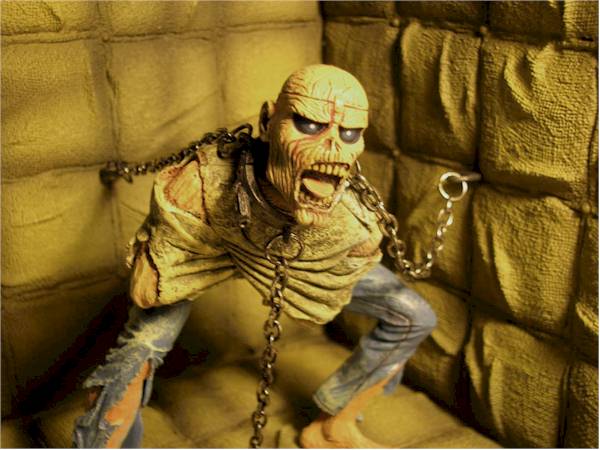
Aaron fav Fictional Characters - Eddie

Eddie, also known as Eddie the Head, is the mascot for the British heavy metal band Iron Maiden. He is a perennial fixture of the group's artwork, appearing in all of their album covers (as well as most of their singles) and in their merchandise, which includes t-shirts, posters and action figures. On top of this, Eddie features in all of the band's concerts, as well as in the first-person shooter video game, Ed Hunter, and as an unlockable character in Tony Hawk's Pro Skater 4.

Originally a papier-mâché mask used in Iron Maiden's stage backdrop, the band transferred the name "Eddie" from the mask to an illustration by Derek Riggs, which was used as the band's debut album cover. Although he is occasionally described as "zombie-like" in the press, Eddie assumes a different guise relating to the themes of individual albums and their corresponding world tours, and has appeared as a cyborg, an Egyptian mummy and a lobotomised mental patient amongst others.

The very first version of Eddie was a mask made by an art student who was friends with Dave (Lights) Beasley, then in charge of lighting, pyrotechnics and other effects for Iron Maiden's live-show. According to Lights, the original mask was a papier-mâché mould of his own face, which was then used in the band's backdrop, consisting of LED lights and the band's logo. At the end of their live set, during the "Iron Maiden" song, a fish-tank pump was used to squirt fake blood out of the mask's mouth, which typically covered their drummer, Doug Sampson. After this initial incarnation, Lights constructed a larger mask out of fibreglass, equipped with flashing eyes and the ability to release red smoke from its mouth.

The band's bassist and founder member, Steve Harris, states that the name "Eddie" comes from the fact that said mask was referred to as "The Head", which sounded like "Ead" in the band members' London accent. According to guitarist Dave Murray the name was also inspired by an old joke:

"A wife had a baby, but it was born with only a head and no body. 'Don't worry,' says the doctor. 'Bring him back in five years time and we'll probably have a body for him'. So five years go by, and there's Eddie the 'Ead, as his parents have called him, sitting on the mantelpiece, when in walks his dad. 'Son,' he says, 'today's a very special day. It's your fifth birthday and we've got a very special surprise for you.' 'Oh no,' says Eddie. 'Not another fucking hat!'"

Once Iron Maiden had secured a record contract with EMI, the band's manager, Rod Smallwood, decided that the band needed "that one figure who utterly stamped his presence and image on the band in a way that was obvious enough to make a good album cover." After seeing some of his artwork on a Max Middleton poster, Smallwood set up a meeting with Derek Riggs and asked to see some of his other illustrations, in the midst of which was the band's first album cover. Originally created as an idea for a punk record, which Riggs states in the 12 Wasted Years documentary was based on an alleged American's skull stuck to a Vietnamese tank, the band had extra hair added to the illustration, making it more suitable to their style of music, and transferred the name from the original masks they used onstage. Surmising that the creature had "great visual continuity," Smallwood decided it would be used for all of the band's artwork. Smallwood claims that Rupert Perry, EMI's then managing director, came up with the idea that Eddie could become a more active part of the band's concerts, originally portrayed by Smallwood himself, wearing an Eddie mask and a leather jacket. The classic "walk-on" Eddie was created for The Beast on the Road tour by Dave Lights after seeing a pantomime version of Jack and the Beanstalk, which used similar giants consisting of "basically a bloke on stilts but dressed up to look about ten feet tall." As the band's stage show expanded, an additional gigantic Eddie was also incorporated at the back of the set during "Iron Maiden", which, like the "walk-on" Eddie, would match the theme of the current tour, such as the 30-foot, mummified version used during the World Slavery Tour which shot sparks from its eyes.

Eddie's debut appearance was on the band's first single cover, "Running Free," in which his face was covered by shadow to protect his identity before the release of the band's first album. Since then, Eddie has assumed a different guise for each cover, such as a "mummified Egyptian god" for Powerslave, a lobotomised mental patient for Piece of Mind, emerging from a grave in Live After Death, and a cyborg for Somewhere in Time.


Links To More Images

https://www.google.co.uk/search?q=eddie+iron+maiden&oe=utf-8&aq=t&rls=org.mozilla:en-GB:official&client=firefox-a&um=1&ie=UTF-8&hl=en&tbm=isch&source=og&sa=N&tab=wi&ei=MPVyUI29FeeS0QWHjYHwAQ&biw=1024&bih=629&sei=MvVyUM2yDqjB0QWhqICQCw#q=eddie+iron+maiden&um=1&hl=en&client=firefox-a&rls=org.mozilla:en-GB:official&tbm=isch&source=lnt&tbs=isz:l&sa=X&ei=MvVyUK_oFoHA0QWPjYGwCg&ved=0CCEQpwUoAQ&fp=1&biw=1024&bih=629&bav=on.2,or.r_gc.r_pw.r_cp.r_qf.&cad=b&sei=MvVyUK_oFoHA0QWPjYGwCg

Aarons Fav Fictional Characters - Freddy (The Ultimate Emo)

Freddy Krueger is a fictional character and the primary antagonist of A Nightmare on Elm Street film series. He appears in Wes Craven's A Nightmare on Elm Street (1984) as a disfigured serial killer who uses a glove armed with razors to kill his victims in their dreams, causing their deaths in the waking world as well. However, whenever he is put into the real world, he has normal human vulnerability. Krueger was created by Wes Craven, and had been consistently portrayed by Robert Englund since his first appearance. In the 2010 remake he was portrayed by Academy Award-nominee Jackie Earle Haley.

Freddy is a vengeful spirit who attacks his victims from within their dreams. He is commonly identified by his burned, disfigured face, red and dark green striped sweater, brown fedora, and trademark metal-clawed brown leather glove on his right hand. Wizard magazine rated him the 14th greatest villain, the British television channel Sky2 listed him 8th, and the American Film Institute ranked him 40th on its "AFI's 100 Years... 100 Heroes and Villains" list.

Robert Englund has said many times that he feels the character represents neglect, particularly that suffered by children. The character also more broadly represents subconscious fears. For example, Englund is on record as saying that in A Nightmare on Elm Street 2: Freddy's Revenge, Freddy represents the main character's repressed homosexual desires.

In 2010, Freddy won an award for Best Villain (or Most Vile Villain) at the Scream Awards.


Freddy is introduced in A Nightmare on Elm Street as a child killer who is set on fire by the parents of his victims. While his physical form dies, his spirit lives on in the minds of a group of teenagers living in his old neighborhood, who he preys on by entering their dreams and killing them. He is apparently destroyed at the end of the film by protagonist Nancy Thompson, but the last scene reveals that he had survived; he went on to antagonize the teenage protagonists of the next five films in the series. After a hiatus, Craven was brought back in Wes Craven's New Nightmare by Wes Craven, who had not worked on the film series since the third film, A Nightmare on Elm Street 3: Dream Warriors.

In 2003, Freddy battled fellow horror icon Jason Voorhees from the Friday the 13th film series in the theatrical release Freddy vs. Jason, a film which officially resurrected both characters from their respective deaths and subsequently sent them to Hell. The ending of the film is left ambiguous as to whether or not Freddy is actually dead; despite being decapitated, he winks at the viewers. (A sequel featuring Ash Williams from The Evil Dead franchise was planned, but never materialized on-screen. It was later turned into Dynamite Entertainment's comic book series Freddy vs. Jason vs. Ash.)

In the 2010 remake of the original film, Freddy is reimagined as a pedophile who had sexually abused the teenage protagonists of the film when they were children; when their parents found out, they set him on fire and killed him.

Wes Craven says his inspiration for the basis of Freddy Krueger's power stemmed from several stories in the Los Angeles Times about a series of mysterious deaths: All the victims had reported recurring nightmares and died in their sleep. Additionally, Craven's original script characterized Freddy as a child molester, which Craven said was the "worst thing" he could think of. The decision was made to instead make him a child murderer in order to avoid being accused of exploiting the spate of highly publicized child molestation cases in California around the time A Nightmare on Elm Street went into production. Craven's inspirations for the character included a bully from his school during his youth, a disfigured homeless man who had frightened him when he was 11, and the 1970s pop song "Dream Weaver" by Gary Wright. In an interview, he said, "When I looked down there was a man very much like Freddy walking along the sidewalk. He must have sensed that someone was looking at him and stopped and looked right into my face. He scared the living daylights out of me, so I jumped back into the shadows. I waited and waited to hear him walk away. Finally I thought he must have gone, so I stepped back to the window. The guy was not only still looking at me but he thrust his head forward as if to say, 'Yes, I'm still looking at you.' The man walked towards the apartment building's entrance. I ran through the apartment to our front door as he was walking into our building on the lower floor. I heard him starting up the stairs. My brother, who is ten years older than me, got a baseball bat and went out to the corridor but he was gone."

Freddy's back story is revealed gradually throughout the series. In A Nightmare on Elm Street 3: Dream Warriors, the protagonists learn that Freddy was conceived when his mother, Amanda Krueger, was gang-raped by a group of mental patients — thus making him "the son of 100 maniacs". Freddy's Dead: The Final Nightmare depicts Freddy's traumatic childhood; he is adopted as a child by an abusive alcoholic named Mr. Underwood, who teaches him how torture animals and inflict pain on himself; Freddy eventually murders him and becomes a serial killer. The film also reveals that Maggie Burroughs is Freddy's biological child.

In Wes Craven's New Nightmare, Freddy is characterized as a symbol of something powerful and ancient, and is given more stature and muscles. Unlike the six movies before it, New Nightmare shows Freddy as closer to what Wes Craven originally intended, toning down his comedic side while strengthening the more menacing aspects of his character.

Throughout the series, Freddy's potential victims often experience dreams of young children, jumping rope and chanting a rhyme to the tune of "One, Two, Buckle My Shoe" with the lyrics changed to "One, Two, Freddy's coming for you", often as an omen to Freddy's presence or a precursor to his attacks.

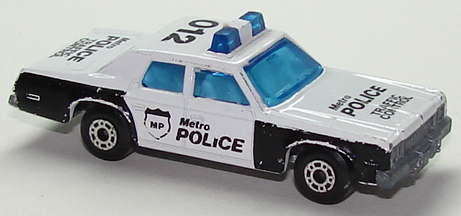
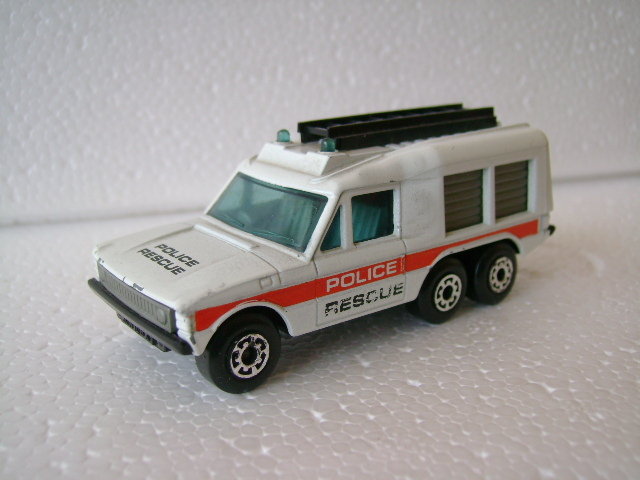
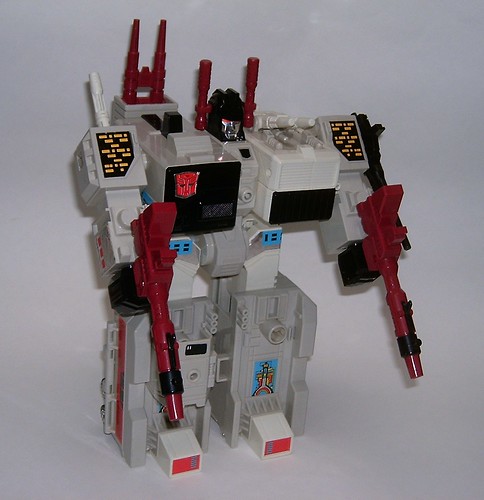
Aarons Fav Toy Cars and Misc Toys

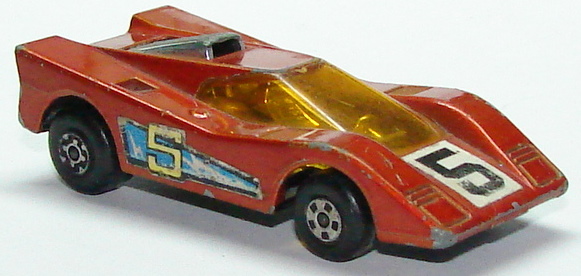
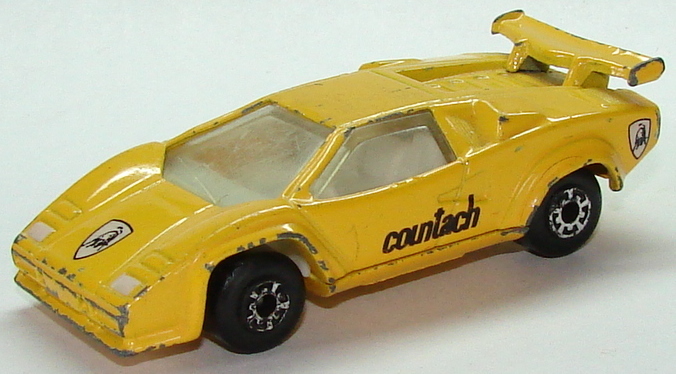
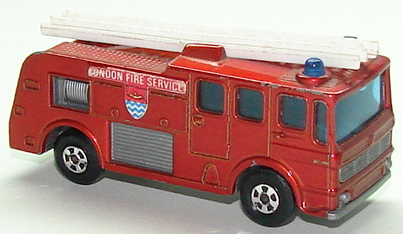
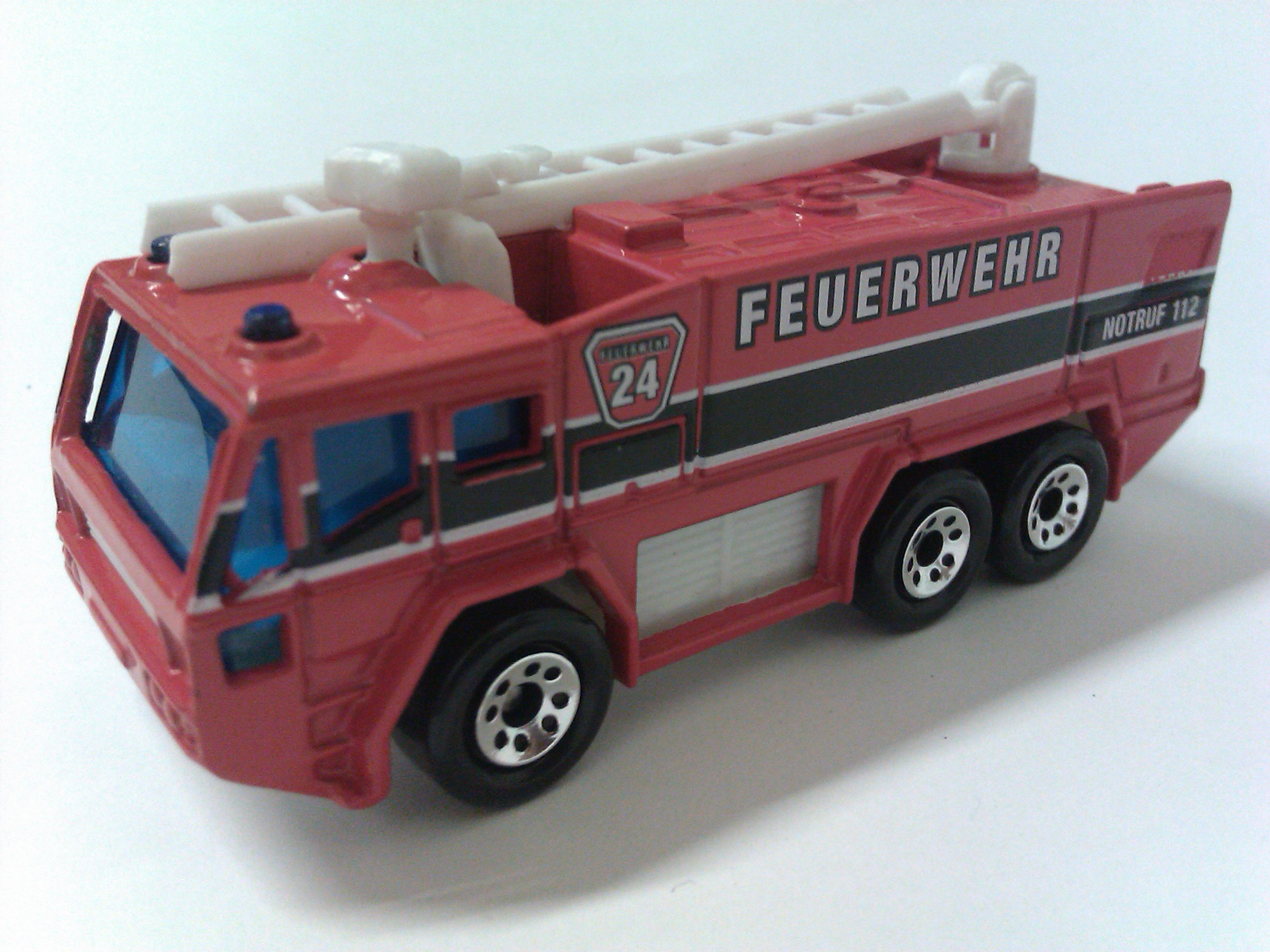
Here are just some of the toy cars he owned...


Aarons Fav Magazine - RAW

Raw Magazine was founded in the summer of 1988 by Dante Bonutto, Malcolm Dome, Mark Putterford and Steve McTaggart& photographer Tony Mottram drafted in from Metal Hammer. They had come together on Metal Hammer magazine having split from Kerrang!, where Bonutto had been deputy-editor. The collective feeling there had been that Kerrang! was becoming too narrowly focused on Heavy Metal and that Metal Hammer would allow them more scope to explore other areas of Rock music. This quickly proved not to be the case and the idea for a new magazine was born, a title that would be a true Rock magazine, featuring Heavy Metal acts but not dominated by them.

To that end they teamed up with marketing man Pete Winkleman and created Raw alongside Phil Alexander, Kirk Blows, Dave Dickson, Dave Ling, Sylvie Simmons, Maura Sutton and Paul Suter, most of whom had also worked on Kerrang!.Under the byline of `RAW` Rock Alive Worldwide.

The first issue went on sale on August 31 of that year as a fortnightly publication featuring Ozzy on the cover tattooing the RAW logo on himself, photographed by Tony Mottram. RAW steadily grew to become a serious rival to the more established Kerrang!. But within the year, EMAP publications, having failed in their bid to take over Kerrang!, decided to acquire Raw instead. The idea, at that stage, remained that the new magazine could overcome the heavyweight Kerrang!, and that EMAP's money and publishing clout would allow the Raw team to achieve this. In the end, though, EMAP simply bought Kerrang! wholesale.

The original Raw magazine, the staff, writers and photographers, remained largely intact until the end of 1989 when Dante Bonutto announced he was leaving. He had been poached as an A&R man by East West Records. The EMAP appointed publishing director, Dave Hepworth, was assigned to find a new editor. The obvious and most sensible choice would have been to appoint Bonutto's deputy, Malcolm Dome, a man who lived and breathed Hard Rock, had been there since its inception and knew virtually everything there was to know about the magazine and the music biz.

Curiously, though, Hepworth gave the job to his old pal Dave Henderson, who knew next to nothing about Rock music and whose only previous experience in the editor's chair had ended with the closure of a magazine. The beginning of 1990 ushered in the new regime and the slow decline of Raw as a viable alternative to Kerrang!. But as soon as Kerrang! became part of the EMAP stable of publications Raw's survival no longer mattered and despite changes of editor and editorial policy, making Raw a Britpop magazine in December 1995, it perished not long after. But I'm not bitter, honest says Mr D. Ling.

In 1993 a weekly television programme named Raw Power was launched to accompany the magazine. It later changed its name to Noisy Mothers and was defunct in late 1995.

Aarons Fav Positions - Fellatio

Fellatio (also known as fellation, and colloquially blow job, BJ, giving head or sucking off) is an act of oral stimulation of a male's penis by a sexual partner. It involves the stimulation of the penis by the use of the mouth, lips, tongue or throat. The person who performs fellatio can be referred to as the giving partner, and the other person is the receiving partner. Fellatio is regarded by many as an erotic act in its own right and a physically intimate act. For many males, it is a turn-on which may be used by the giving partner to initiate foreplay and sexual arousal prior to sexual intercourse. The act may also be performed for the sexual gratification derived by the male receiving partner and can be continued until orgasm and ejaculation of semen. Fellatio is also sometimes practiced when sexual intercourse can create a physical difficulty for a sex partner.
 
Deep-throating is an act in which a man's entire erect penis is inserted deep into the mouth of a partner, in such a way as to enter the receiving partner's throat.

It is difficult for most people to perform deep-throating, due to the need to suppress the natural gag reflex. Different people have different sensitivities to the reflex, but some people learn to suppress the reflex.

A variation of Fellatio is a position called "69"


I think you get the picture...


Aarons Fav Positions - Standing

Most of these positions can be used for either vaginal or anal penetration. In the basic standing position, both partners stand facing each other. The following variations are possible:

In the basic standing position, both partners stand facing each other and engage in vaginal sex. In order to match heights, the shorter partner can, for instance, stand on a stair or wear high heels. It may be easier to maintain solid thrusts if the woman has her back to a wall. With such a support, the Kama Sutra calls this position the suspended congress. This position is most often used in upright places, such as a wall in a bedroom or a shower.

The penetrating partner stands, and the receiving partner wraps their arms around his neck, and their legs around his waist, thereby exposing either the vagina or anus to the man's penis. This position is made easier with the use of a solid object behind the receiver, as above.

Alternatively, the receiving partner can face away from the penetrating partner which allows for anal sex. This position is varied by having the receiving partner assume different semi-standing positions. For instance, they may bend at the waist, resting their hands or elbows on a table.

Aarons Fav Positions - Cowboy

Man on top, also called the, cowboy or riding position, is a group of sex positions in which:
  • the man lies on his back or sits in a chair, couch, etc.
  • the man straddles the inserting partner and the partners face each other.
  • the partners align the anus of the receiving partner with the phallus of the inserting partner to achieve penetration.
The cowboy name derives from the image of the receiving partner "riding" the partner as a cowboy rides a bucking horse. It is one of a number of receptive-partner-superior sexual positions, another being the reverse cowboy position. It is fairly simple to achieve and maintain and pleasures both partners. This position is also used as a precursor to the lateral coital position described by Masters and Johnson.


This position is commonly cited as one of the more popular sex positions. It gives the receiving partner more control and also allows the inserting partner to view and caress the receiving partner's chest and abdominal region.

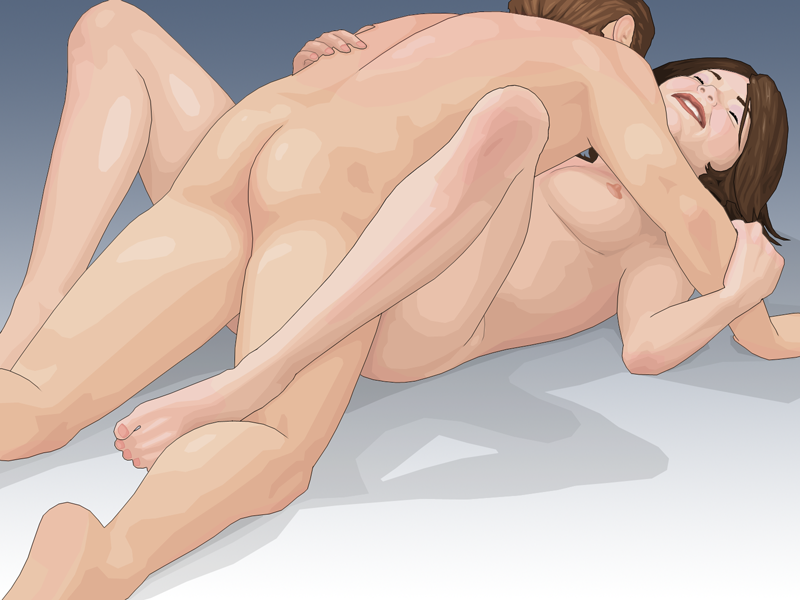
Aarons Fav Positions 1 - Missionary

The missionary position is a "man-on-top" sex position usually described as the act in which the woman lies on her back and the partners face each other. Though often acted on and applied by heterosexual pairings, it may also be used by gay and lesbian couples.

The missionary position is an example of ventro-ventral copulation. Variations of the position allow varying degrees of vaginal tightness, clitoral stimulation, depth of penetration, participation on the part of the woman, and the likelihood and speed of orgasm.

A common myth states that the term "missionary position" arose in response to Christian missionaries, who taught that the position was the only proper way to engage in sexual intercourse. This explanation probably originated from Alfred Kinsey's Sexual Behavior in the Human Male through a confluence of misunderstandings and misinterpretations of historical documents. Tuscans refer to the position as "The Angelic Position" while some Arabic-speaking groups call it "the manner of serpents."

The missionary position is often preferred by couples who enjoy its romantic qualities afforded by copious skin-to-skin contact and opportunities to look into each other's eyes and kiss and caress each other. The position is also believed to be a good position for procreation. During sex, missionary allows the man to take charge of the rhythm and depth of thrusting. It is also possible for the woman to thrust against him by moving her hips or pushing her feet against the bed, or squeeze him closer with her arms or legs. The position is less suitable for late stages of pregnancy, or when it is desired for the woman to have greater control over rhythm and depth of penetration.

http://en.wikipedia.org/wiki/Missionary_position

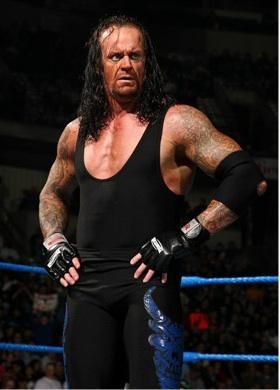
Aarons Fav Sportsmen - Mark Calaway

Mark William Calaway
born March 24, 1965
Sport - Professional Wrestler
AKA - The Undertaker


is an American professional wrestler better known by his ring name The Undertaker. He is signed to WWE and is the company's most tenured performer, and he is the only remaining active competitor from the very first episode of WWE Raw in 1993. Calaway began his wrestling career with World Class Championship Wrestling (WCCW) in 1984. He joined World Championship Wrestling (WCW) as "Mean" Mark Callous in 1989. When WCW did not renew Calaway's contract in 1990, Calaway signed with the World Wrestling Federation. After debuting as Kane the Undertaker, the name was shortened to the Undertaker and he has remained with the company since.

The Undertaker has performed under two contrasting personas. The first is the role of The Deadman, an undead, occult-like figure, which has consisted of many different styles. He debuted his original Deadman persona during his own on-camera debut at Survivor Series (1990). At this event, the Undertaker was clad as a Western mortician. Next, in October of 1998, the Undertaker appeared as the leader of the Ministry of Darkness (with similar apparel). Since WrestleMania XX, the Undertaker has appeared as a hybrid version of the Deadman character, using elements of the previous Deadman incarnations.

His other persona has been that of The American Bad-Ass, a biker, which he portrayed from May 2000 through November 2003. The Undertaker is also associated with various specialty matches: the Casket match, the Buried Alive match, the Hell in a Cell and the Last Ride match. An important part of the character is the Undertaker character's half-brother Kane, who has also played an important role in The Undertaker's character development. Kane was introduced in 1997, and has both feuded with The Undertaker and performed in a tag-team with him as the Brothers of Destruction.

The Undertaker holds an unrivaled record of being undefeated at WrestleMania, WWE's premier pay-per-view event, with a 20–0 record. Among other accolades, Calaway is an eight-time World Champion having won the WWF/E Championship four times and the World Heavyweight Championship three times as The Undertaker, and the USWA Unified World Heavyweight Championship once under the Master of Pain character. The Undertaker is also a seven-time World Tag Team champion: a six-time WWF Tag Team Champion and one-time WCW Tag Team Champion. The Undertaker was the winner of the 2007 Royal Rumble and became the first man to enter the annual event last and win.

Aarons Fav People - Rolf Harris

Rolf Harris
born 30 March 1930


is an Australian musician, singer-songwriter, composer, painter and television personality. Harris, who was born and grew up in Perth, Western Australia, was a champion swimmer before studying art. In 1952, he moved to the United Kingdom, where he started to draw animations for television programmes. Harris soon afterwards began a musical career, initially singing and playing the piano accordion. In 1957, he wrote "Tie Me Kangaroo Down, Sport", which later became a Top 10 hit in Australia, the UK and the United States. While performing in Canada he introduced a longstanding, popular routine around his song "Jake the Peg". Harris often uses unusual instruments in his performances: he plays the didgeridoo, is credited with the invention of a rhythmic percussion instrument, the wobble board, and is associated with the Stylophone, a small electronic keyboard instrument.

During the 1960s he became a popular television personality, later presenting shows including Rolf's Cartoon Club, Animal Hospital and various programmes about serious art. In late 2005 he painted an official portrait of Queen Elizabeth II, which was the subject of a special episode of Rolf on Art.

Aarons Fav Singers - Mark Knopfler

Mark Freuder Knopfler
born 12 August 1949
Band - Dire Straits


is a British guitarist, singer, songwriter, record producer and film score composer. He is best known as the lead guitarist, vocalist, and songwriter for the British rock band Dire Straits, which he co-founded in 1977. After Dire Straits disbanded in 1995, Knopfler went on to record and produce seven solo albums, including Golden Heart (1996), Sailing to Philadelphia (2000), and Get Lucky (2009). He has composed and produced film scores for eight films, including Local Hero (1983), Cal (1984), The Princess Bride (1987), and Wag the Dog (1997) . In addition to his work with Dire Straits and as a solo artist and composer, Knopfler has recorded and performed with many prominent musicians, including Phil Lynott, Chet Atkins, The Chieftains, Eric Clapton, Bob Dylan, Emmylou Harris, Jools Holland, Steely Dan, Bryan Ferry, Sonny Landreth, and Van Morrison. He has produced albums for Tina Turner, Bob Dylan, and Randy Newman. Knopfler is one of the most respected fingerstyle guitarists of the modern rock era, and was ranked 27th on Rolling Stone magazine's list of 100 Greatest Guitarists of All Time. Knopfler and Dire Straits have sold in excess of 120 million albums to date. A four-time Grammy Award winner, Knopfler is the recipient of the Edison Award and the Steiger Award, and holds three honorary doctorate degrees in music from universities in the United Kingdom.